Thursday, 29 October 2015

Research: Audiences

Audiences are the people who are going to watch the entertainment and artist has produced. An audience can be the make or break of and artist which is why they are extremely significant to the success of artists. Audiences may be categorised in different ways, e.g. age, gender, race, class etc, in order to fit the genre of music. Audiences can also be categorised according to their jobs.
These are the categories...

A = Top management, bankers, lawyers, doctors and other professionals.
B = Middle management, teachers, many 'creatives' e.g graphic designers. 
C1 = Office supervisors, junior managers, nursers, specialist clerical staff etc.
C2 = Skilled workers, tradesperson (white collar)
D = Semi-skilled and unskilled manual workers (blue collar) 
E = Unemployed, students, pensioners, casual workers. 


Advantages and disadvantages of categorising audiences:


Advantages: 
  • You are able to establish a target audience in order to know exactly who to sell music to.
  • Market research becomes easier once audiences are categorised.
  • Once audiences are categorised, the artist is able to find out whether they would buy the product, based on their income. 
Disadvantages:
  • Stereotypical, meaning some people will not fit into these categories.
  • Categorising audiences do not consider interests of the public, but just on their income and status. E.g. a person in category A, may actually be interested in rap music which then does not fit the stereotype because of their high class job.


Genre audiences:
Different genres have different audience. This is because of the factors such as age, gender, race and class. For example, the Pop genre have a very young audience from around the ages of 5-25 which can be both males and females. This is because artists such as Taylor Swift and Justin Bieber make songs that apply to the younger audiences. This may then mean these artists have to consider the fact that they are role models and what music they are producing for their target audience. However, genre's such as Hip-hop and Rap have a much older target audience, from around the ages of 16-28 who are usually from an ethnic background being working-class. This is because artists such as Eminem, Wiz Khalifa and Drake makes music that is inappropriate for the younger audiences. This means the artist has to consider that the audience is a bit older meaning they are able to understand the music and lyrics more. Moreover, genres such as Jazz and Classical music have audiences that are much older than the others being 30+ and usually white from an upper-class. This means that the audience are able to afford the music as they are much more stable than the other genres of music due to their ruling-class status.


Audience reactions:


Audience engagement links to Hebdige's theory because he argued that people have different cultural backgrounds which influence the way people read into texts suggesting the audience engagement would be different from every individual.
Audience expectations links to Goodwin's theory because he argued that there are stereotypes within the industry. The audience has a certain expectation and stereotype which the artist will meet in order to keep them interested and engaged.
Audience identification links to Dyer's star theory because he argued that through the artist being a star the audience is able to relate to them through their ideologies and personality being publicly displayed.


Overall, from researching into audiences it has given me a clear understanding into who my target audience will be. My audience will be from the ages of 16-28 because my genre will be Hip-Hop/RnB. This means that I will have to match the audience expectation and stereotype of the category being C2 to E. By following these conventions I will be able to create a successful music video.

Wednesday, 28 October 2015

Research: Subcultures

Subcultures are little groups who are united through common values systems and tastes (clothes, music, politics etc). They are also seen as groups who are positioned outside of mainstream culture. For example, 'punks' are seen as a subculture due to the way they dress in leather clothing, have mohawks and spikey hair, piercings and tattoos, they listen to rock music and tend to be old white males usually. Whilst subcultures like 'queers' are young (18-30), have rivalry with religious groups, are activists who believe in freedom and equal rights and are likely to listen to pop songs.


Generally, subcultures do not like conformity and rebel against common values and systems. They do not follow capitalism and have their own set of rules and beliefs in the way they should live their lives. They tend to not be consumerists as they consume a good and relevant lifestyle. Subcultures generally do not like mixing and they have stereotypes where they do not like certain groups of people or races. People within subcultures tend to respond to cultural dominant values and hegemony negatively, meaning that they will oppose it. Subcultures do not like having to follow one set of values and believe they should be allowed to listen to whatever music they like and not just the main stream popular culture.


Subcultures are evident in the music industry because they all take a different route in music genres. Punks tend to listen to Rock
Queers tend to listen to Pop
Skinheads tend to listen to Reggae 
Bikers tend to listen to Rock
Hipsters tend to listen to Indie 


McCracken:
McCracken argued that the postmodern world is full of diversity, dynamism and creativity. He argued that if we look at the array of values and ideologies then we can't say all subcultures come from one culture. This suggests that the different subcultures cannot be identified as just stemming from one culture. 

Contrasting McCracken's view is Hebdige...

Hebdige:
Hebdige argued that although some people think subcultures appear to be different, deep down they are the same. Subcultures are 'little' cultures as they are all doing the same thing of assistance and consumption is an active process in which different audiences read into the same cultural product. Many groups are involved in protest and resistance against the mainstream making them the same. He argued that people can resist the mainstream culture and become a subculture. 

In relation to Dyer's views:
The theory of subcultures oppose Dyer's theory on 'star image' as Dyer suggest their are four key ways in identifying a star. This ignores subcultures who are niche artists as Dyer argues that stars are social constructions. Therefore, Hebdige argues that stars do not have to look a certain way to be classified as a star as artists within subcultures are also able to be a star even though they do not follow the mainstream. For example, "Oasis" and "Foo Fighters" are seen to be stars despite the fact that they are in subcultures and sing a different genre of music rather than the mainstream. These artists are still extremely successful. Bands like "Oasis" and "Foo fighters", further support Dyers idea on stars because Dyer states how stars become a commodity and the audience engage with their ideologies and values. This is clearly seen if we look at the images below where the fans are imitating their favourite stars.

Oasis:


Oasis fans:


Subcultures and the music associated with them came out post-war where there was social cohesion. (50s/60s). In these times, consuming music became an active process as it was famously known as the 'swinging 60s'. This shows that everyone reads into songs differently due to cultural backgrounds and people cannot assume that the 'mass culture' is the same.


The industry in the modern times now target audiences through shows such as 'X-Factor' in order to find the gaps in the market. These shows allows audiences to see an artist evolve and state their own opinions by voting on the show. When there is a gap in the market e.g. a new boy band, these shows are able to find ordinary people and construct them into stars. For example, One Direction is now one of the biggest boy bands in the world and came into the industry when there was a gap in the market for a boy band. Shows like X-Factor are now able to appeal to subcultures as they have different themes for different nights. For example, one of the nights in the competition it might be 'rock week' suggesting that artists have to sing from the rock genre, which engages the subculture into the show.

In relation to Hebdige...
He stated that consuming music is a process that differs from person to person which is clearly evident in today's society. He believed that social backgrounds can lead to different readings of the same song meaning that people are not part of one 'mass culture' which all like one thing but for different reasons.

In relation to Dyer's theory...
He stated that stars represent shared cultural values and attitudes and will promote a certain ideology. Fans who agree with that set of values will support the star and also will imitate stars in an aspirational effort to get 'closer' to the glamorous, fantasy lifestyle they appear to have. This may take the form of 'dressing up', imitating performances, adopting behaviour etc.


Overall, from researching into subcultures I have found that there are many different target audiences to choose from. My music video will be targeted towards the younger audience ages between 16-25 as they will most likely be interested in the RnB and Hip-Hop genres. These are not part of a subculture as it could apply to anyone who listens to these genres. I would prefer not to aim it at one subculture as this will limit my target audience so I will try choose a wider section in society to target at.

Tuesday, 27 October 2015

Research: Popular Theory

The popular music/culture theory is the understanding of ideas and attitudes of mainstream culture in society which has an influence upon us as an audience. They argue how the popular culture is made for the masses, and the "true art" is made for the ruling class. This is because the lower class are oblivious to real music and so listen to what ever the middle-class allows them. This suggests that the audience don't actually have a real choice although they think they do. Instead, all music produced for the popular culture are the exact same every time just different artists performing it. The theorists I will discuss are, Antonio Gramsci, The Frankfurt School, Theodor Adorno, The Birmingham School, and Dick Hebdige.

Antonio Gramsci:
Gramsci is a leading Marxist thinker who created the theory of Hegemony. Hegemony means to look down upon the predominance of someone's social class over others suggesting that there is a control from the dominant/ruling upper class over the working class. The upper class has it's own way in viewing the world and they suggest that there is a significant difference between them, and the working class. The central ideologies of the ruling class are seen as becoming most powerful when they are accepted as 'common sense'. According to Gramsci, we can judge ideology to be effective if it is able to connect with the 'common sense' of the people. This suggests that, the upper class produce mainstream music for the masses to be entertained from it showing the dominance they have in order to influence such a large society. This means that hegemony is presented through the ruling class' predominant ideologies such as the nuclear family and being dependent on each other. Therefore, hegemony is presented to us through the lyrics of songs where the masses follow these ideologies without realising. They are able to express these themes through mainstream music that the masses listen to.

Frankfurt School:
This critical theory was the earliest version of the Neo Marxist theory. They argued that the culture plays a central role in cementing it's audience to current situations and had transformed culture itself into an ideological medium of domination. They also created the 'hypodermic syringe model' which suggested that society was able to feed the audience what ever they wanted. One theorist from the Frankfurt School was Max Horkheimer who encouraged change in society. Another, was Theodor Adorno, who stated that art provided an alternative vision of reality.

Theodor Adorno:
Adorno is a critical theorist who argued the divide between the social classes and influenced by Karl Marx. He argued that there was a standardised production to manipulate mass society into passivity. He also stated that there was 'pseudo' which means individualisation and how the audience think it's different but actually it isn't. He also argued that the 'true art' was to entertain the bourgeoisie as they are the 'posh' people listening to genres such as classical or jazz, whilst the working class people get the music 'dumbed down' by the ruling class through hegemony. Furthermore, according to Adorno the type of music the masses listen to are mainstream popular culture which dominate the charts. However, listening carefully to the charts suggest a pattern in them where all the songs being voted on sound extremely similar to each other. Looking at the charts 'psuedo individualisation' was evident in it, from looking into the last couple of weeks in December shows Justin Bieber dominating it with him being number 1, five times for the whole of December. This suggests the masses listening to the same types of music over and over again and being influenced on the ruling class ideologies.


Birmingham School: 
One theorist from the Birmingham School was Stuart Hall. Hall was a cultural theorist an sociologist along with Hoggart and Williams. He is credited with playing a role in expanding the scope of cultural studies to deal with race and gender in particular. Despite this, he still made some contributions to the music industry, largely by commenting on the ideas applied to the content of the music we listen to through popular forms such as the radio. He also created the Reception Theory which was the idea of Encoding and Decoding. Encoding meant that it was the process by which a text is constructed by it's producers, whilst Decoding was the process by which the audience reads, understands and interprets the text. However, different spectators will decode the text in different ways, perhaps not in the way the producer intended. This means that the audiences read and understand a particular text according to their cultural upbringing. Hall also stated that by the term 'popular' it pointed to a process whereby 'the people' erupted, made their culture known to the ruling classes in unpredictable ways, and therefore complicated the projects of the upper class.

Dick Hebdige:
Hebdige argued that although some people think subcultures appear to be different, deep down they are the same. Subcultures are just 'little' cultures as they are all doing the same thing of assistance. He argued that consumption is an active process in which different audiences read into the same cultural products. These subcultures try to resist the mainstream music, however people can resist it but will become a 'subculture' eventually, suggesting that the masses are still actually the same. Therefore, genres such as Rock would link to the subculture of 'punks' as they promote the same type of lifestyle, being violent and angry and also dressing in leather clothes etc.

Overall, from looking at the different theorists it has given me an insight in what the popular culture is and what different perspectives suggest on it. My beliefs in the popular culture mainly agree with Hebdige. This is because I still believe that although the masses are not the same and are able to resist what is given to them, they still resist in the exact same way as everyone else, which is to be apart of a subculture suggesting the similarities within the masses. I will represent my artist different to the popular culture in order to please the different subcultures and gain niche audiences. This is because the popular culture is socially constructed which is influenced by the ruling class.


Research: Dyer's "Star Theory"

The term "star" refers to the set of meaning constructed around singers in order to sell their music to a mainstream or loyal audience, however this is mainly mainstream. A "star" can also apply to the film industry due to the same popularity gained and the mainstream audience they attract.
Richard Dyer's created this theory and stated that:

  • "Star image is incoherent, that it is incomplete and 'open'..." 
  • "Star must be simultaneously ordinary and extraordinary for the consumer."
  • "The star must be simultaneously present and absent for the consumer."
The quote "Star must be simultaneously ordinary and extraordinary for the consumer" suggests that the artist must be ordinary and normal enough to be able to identify with the audience and give them a sense of connection with the artist. It is important for the audience to be able to connect with the artist as this will maintain the artist's loyal fan base. As well as this, the artist must be able to be extraordinary meaning that they will still be able to entertain their audience in a significant way which will also keep his career successful.


Performer/Pop Star:
The main difference between a Performer and Pop Star is that a performer may or may not be famous. This means that the person purely performs the music. However, a Pop "Star" is image constructed to an audience, meaning they are not being themselves and it is purely based on what the audience wants to see which will keep them entertained. This could mean the Pop "Star" dressing or looking a certain way, to gain the most publicity. One example of a performer is Passenger who is seen as a performer as he is not in the public eye often and is only known for his music. However, within the same genre of Indie music an example of a Pop "Star" would be Ed Sheeran as he is followed by audiences and is more publicly known creating his "star" image. 

Dyer identified four elements to recognising a star:

1) Stars as constructions:
Stars are seen as artificial images in order to gain popularity. Also, this helps if their image contains a unique selling point (USP) which ensures the loyal audiences to stay engaged. For example, shows such as "X-Factor" promote the idea of star constructions due to the live displays on TV every week showing the process of building an ordinary person into a Pop "Star". One successful construction that was created on the "X-Factor" were "One Direction". In the top half of the picture the boys are all young and still new on the show, however the bottom half of the picture is after they became famous and displays how their appearances changed significantly. This was only done to gain the publicity of the mainstream audience.


2) Industry and Audience:
Dyer believes that stars are manufactured to make money. He also states that pop stars, whatever the nature, are quite clearly the product of their record company and therefore, must be sold. The record companies identify what sells, and produce the same, the same, and the same. This means the audience can actually buy into the artist such as buying mugs, clothes, calendars, etc. For example, Justin Bieber has his own merchandising company where his audience can buy these items.


3) Ideology and Culture:
Dyer believes stars represent cultural values and attitudes and promote a certain ideology. Audience interest in these values enhances their 'star quality' and create their star persona. Social networks give pop stars the opportunity to establish their own values outside their music. For example, Kanye West is an extremely influential artist due to his cultural values and attitudes. His song, "Diamonds from Sierra Leone" clearly portrays his views on child slavery as it features visuals of young African children toiling away in mines. Kanye also has various social media accounts where he expresses his personal opinions regularly.


4) Character and Personality:
Dyer believes that a star is a construct, but the construct that has a foundation of realism. Star provide audiences with a focus for ideas of "what people are supposed to be like." Stars may support hegemony (dominate cultural ideology) by conforming to it (thin/beautiful) or providing difference (fat/still loveable). For example, Rita Ora fits into the image the media wants which is to be skinny and pretty. However, artists such as Adele does not fit in with this image and is still extremely successful although she is overweight. Adele has influenced audiences that it is okay to be overweight and to be able to love yourself regardless of this. She has become lovable and extremely successful within the music industry.


Control on star image is extremely complex as most of the time the artist does not have much control. This is because in order to entertain the public and remain popular they need to sell themselves in a certain way which causes them to be a social construct. Also, in order to remain in a successful record label it might mean that the artist has to conform to whatever the record label wants to ensure they are still signed.


Overall, Dyer's theory is extremely important as it outlines the arguments to how star image is created. I am going to represent my artist through ideology and culture. This is because it keeps the artist as honest as possible to the audience. Also, this enables the artist to be free to express there own opinions and gather their own fanbase. This also makes the artist independent and not dependent on their record label company to be forced into a certain star image.

Sunday, 11 October 2015

Research: Star Image

Star image is the way an artist is represented to the audience. The most effective way to do this is through music videos as this can reach a mainstream and international audience. Star image is usually created from a artist who is mainstream and is known internationally. They are then seen as a "star".

Music videos are able to boost an artist's career by:
  • It can create new reputations for artist's if they feel they are becoming unpopular. This will then boost their appearance into a new artist gaining publicity.
  • Promotion and publicity for the artist's upcoming album.
  • Building a relationship between the audience and artist. This can happen through the artist's feelings being portrayed in the music video for the audience to feel closer to the artist.
  • Gain profit.

Class Analysis:
As a class we analysed Kylie Minogue's star image development. This is what we found:


From Kylie's music video we found that she had made a rapid change from an innocent new comer to a more confident artist who had changed her morals and values from the influence of the music industry. Kylie has become sexier and more appealing within her career where her songs and lyrics have become sexualised to fit in with the music industry.

Individual Analysis:
From my own research, I analysed Rihanna and found her development into a "star".


2005:
Rihanna's first song was "Pon de Replay" which was released in 2005. Her appearance was seen as innocent as she was only 17, although her stomach was showing during this clip there was no sexual references made and was only portrayed as enjoying the music. The narrative of the video was to persuade the DJ to turn the music up to have fun and dance with no men needed. This suggests that she had innocent values due to the lack of male attention she receives in this video. Her target audience was younger teens from ages 10-15 which is why she was portrayed in this manner. The lyrics of this song is also still innocent as she is simply stating "Come Mr. DJ song pon de replay, come Mr. DJ won't you turn the music up" suggesting her only intentions are the listen to the music and dance.


2007:
After two years of being in the media, Rihanna's appearance was already changing slowly. The opening scene of her song "Umbrella" is Rihanna laying in a sexual way, wearing tight black clothing that is extremely short and cut open. This suggests the change in morals over the two years as she is being portrayed in a much "sexier" way now. She is the centre of attention being the only female throughout this video whilst her back ground dancers are males. Her target audience changed from her first hit, to the ages between 15-19. This is because her values were changing and she was becoming more sexually attractive to the male audiences. The lyrics to this song is "When the sun shines, we'll shine together, told you I'd be here forever" suggesting that she is singing about love and that is her main focus.


2010:
Three years after "Umbrella" there is a significant change in her appearance and her target audience had become 16+. Her song "Rude Boy" portrayed her in a sexual way due to her wearing much more tighter and explicit clothing than before. The concept of this music video is her dancing around sexually, whilst there is only one male in this video watching her. She also dances on him which creates the "growing up" representation as she is a bit older now. Her values are clear and portray the idea that there is no harm in flirty and acting sexually around males. The lyrics of this song are "Come here, rude boy, boy, can you get it up? Come here rude boy, boy, is you big enough? Take it, take it, baby, baby" suggesting her sexual intentions with the male.


2013:
Rihanna then released the song "Pour It Up" which maintained the image she had portrayed in 2010. Her appearance was at the extreme level in being "sexy". This is because the concept of this music video was that Rihanna was shown dancing on a pole and shaking her bum for the male audience. She is half naked in this video in order to expose her assets and match the lyrics of the song which is saying "Strip clubs and dollar bills, I still got my money" also suggesting that her only focus is to maintain her income and will do anything for it. This changed her target audience once again to 18+ due to her explicit music video and was mainly targeted at adults.


Other star representations in the music industry:

These are some representations in the music industry of artists that are the opposite of Rihanna:


Macklemore: This artist is represented quite odd and different way within the music industry. He is a white rapper which is very rare as Rap is dominated by the black culture. Also, he promotes homosexuality although he is not gay himself, this suggests he is a supporter of the LGBT community. This is also extremely rare within the music industry itself as they tend not to support this idea.


FKA Twigs: This artist is also represented in a odd and different way within the music industry. She is qwerky and unique due to the way she presents herself and performs her music videos. Her lyrics tend to be quite controversial as she sings about niche subjects.


50 Cent: This artist is represented as a 'thug' as he originally came from the ghetto where he was involved in gangs and crime. He has released a film showing his life story where he had previously got shot. This suggests he is presented as a 'thug' within the music industry which is extremely different to the mainstream artists.


Changing "star" image can be done in 4 ways:

  • Sexual: Some people can use music videos to exploit or to feel comfortable within their sexuality. For example, Trey Songz is extremely sexual within his music videos and exploits women within them. He is shown messing around with different girls and presenting the 'lavish lifestyle' in a way in which it is okay to treat women in this manner. This is Trey Songz in his music video 'Foreign' explicitly showing him touching the girls.

  • Political: Some people can use music videos to express their political views. For example, Kanye West's 'Diamonds from Sierra Leone' suggests his ideologies and values within politics. He raises the issue of slavery in the third world countries and gives the audience a view into his beliefs on this topic. 

  • Moral: Some people can use music videos to express their personal opinions on issues that they believe are important. For example, Michael Jackson's music video 'Heal the World' suggests his moral views on how to make peace in this world. He expresses his beliefs on what we should change in this world and how this can happen showing the audience his morals.
  • Social: Some people can use music videos to represent a type of lifestyle or ideologies. For example, DJ Khaled's 'Hold You Down' shows the idea of a certain type of lifestyle. He is able to show his mansion with a swimming pool, and many girls around him portraying the 'lavish lifestyle' the artist lives.

Overall, star image is extremely important because this is the factor that can make an artist's career successful. I plan to represent my star in a way in which the mainstream society will accept. This is because they are the audience that will be listening to the music so it will have to please them. I plan to represent my star in a sexually attractive way, however, not to the extent of Rihanna's videos "Rude Boy" and "Pour It Up" because this might then bring negative attention to the artist and will cause a loss of fans.

Research: Intertextuality

Intertextuality is when something in a music video is an ideology of past events or references to other famous people. Goodwin stated that out of his 8 key factors which makes a music video, the 6th one states intertextual reference. This is because some music videos tend to make references to other films, TV programmes or other famous people e.g. Madonna's song "Gimme All Your Luvin" made references to Marilyn Monroe by matching her appearance. This is usually done in music videos to cause a controversy in the media in order to gain more publicity for the artist.


Examples of intertextuality in music videos:


1) George Michael's "Shoot the dog"

As a class we analysed George Michael's "Shoot the dog" music video and found that this music video is purely based on intertextuality as it has a number of references made. It mocks the English traditions and also mocks the people who they refer to e.g. portraying President Bush as dumb. Throughout this video these references were made:

  • The White House
  • The Simpsons
  • Tony Blair being George Bush's "Bitch"
  • The Queen
  • David Beckham and Scholes
  • Ginger Spice
  • Saddam Hussein
  • Trevor McDonald

This created great controversy as these were current affairs happening at the time and most references were political, causing a greater hype than other music videos. It did offend some of the pubic, however, it was still successful in causing a hype and becoming very popular.


2) Nicki Minaj's "Moment 4 Life"

From my own research, I found that in Nicki Minaj's "Moment 4 Life" music video it is evident that intertextuality occurs. This is because the introduction in the beginning of the music video suggests the references to the famous fairytale of "Cinderella". She makes references to a fairy god mother, glass slippers, going to a ball, finding a prince, and having to be home by midnight. These all refer to the tale of "Cinderella" making it intertextuality.


3) Big Sean's "Play No Games"

From my own research, I found that in Big Sean's "Play No Games" music video it is clear that there is intertextuality. This is because throughout the video there is a constant reference made to the old TV programme "Martin" from 1992. This is clear because the introduction is identical to the TV show, every artist is portraying one the characters from the show, and the setting of the video is also identical to the show. This suggests the clear intertextual reference being made in order to gain more publicity from the already loyal fans of the TV show.


Advantages of intertextuality:

  • Appeals to an audience due to entertainment.
  • More recognition/publicity/profit.
  • Understanding artist's views, morals and opinions.
  • Bring something new into the music video industry.

Disadvantages of intertextuality:
  • Offensive to the public.
  • Influences opinions of the public on e.g. political issues.
  • Spreads negativity if the reference is portrayed negatively.
  • Artist's can lose fans if they do not agree with the artist's opinions.
  • Controversial, which may be in the media for negative reasons.

Overall, I plan to use intertextuality because it creates a new form of entertainment for the public and is likely to gain more publicity for the artist. However, I know that I need to be careful with what references I choose to make in order to not offend any of the public whilst portraying my opinions. Therefore, the references have to be non political and more subtle than e.g. George Michael's "Shoot the dog" music video.

Saturday, 10 October 2015

Research: Mulvey's Male Gaze

Laura Mulvey is a British feminist film theorist. She created the theory of the "Male Gaze" (1975) suggesting that the camera is made to be from a mans point of view. The camera constantly focuses on female's and their body parts in order to entertain the male audiences. The audience view the women presented in these videos as constantly inferior and powerless. Women can be thought of in 3 ways:
  • How men look at women; which they believe the women look sexy and attractive.
  • How women look at themselves; which they believe they look good and are confident with their bodies.
  • How women look at other women; which they believe other women are not representing all women accurately. 

Examples where the "Male Gaze" occurs: 


1) Robin Thicke's "Blurred Lines"

This music video is representing women as sexual objects who are dancing around the men half naked with promiscuous attitudes. This suggests the "Male Gaze" does fit in this video due to the focus on the women and their assets being exposed. The females are topless with only knickers on and dancing around the men like they are the superior ones as they are in suits. This represents the women as weak and suggests that women should be under the control of men. This gives the audience the impression that it is ok and normal for women to be treated in this way and is promoting inequality within gender.


2) Benny Benassi's "Satisfaction"

This music video is purely focused on the women throughout. They show the women dressed up as "sexy" builders using tools to cut and drill into the wood. The women are also half naked and the camera is focused on their body parts e.g. bum and boobs suggesting the "Male Gaze" theory occurring. The drill is shown moving in and out of the wood which suggests the reference to sexual activity and develops sexual connotations. This can be seen as phallic actions. This also gives the audience the impression that women can do a man's job however it has to be in a sexy way in which to please the male audience.


3) Nicki Minaj's "Anaconda" 

This music video is focused on women dancing and showing their bums to gain attention. The women are shown dancing around in order to show their bums. This suggest the "Male Gaze" fits into this music video also as the camera is focusing on the female's bodies. This represents the women as sexual objects also, to the audience as all they are doing is promoting their bodies while dancing for the male audience.


Some criticisms of the theory:

  • The camera is assumed to be a man's perspective looking at women, which assumes all men are heterosexual.
  • Excludes gay and lesbian people.
  • No female empowerment, degrades women in the media.
  • Doesn't apply to all women, the theory isn't representative of the women in today's society. Not all women want to be presented as objects of men.
  • Men can also be gazed by females, e.g. when topless.
Trey Songz is an example of the "Male Gaze" reversed due to him being topless and also presented as sexy whilst working out in the gym.


Overall, my choice of genre is most likely to be RnB or Hip-Hip which would be appropriate to us the "Male Gaze" as it it what is conventional to the genres. I plan to represent women in a "sexy" way however, not as sexual objects for men, but standing up for the women they are and using feminism.
This is because, it is clear that not all women are actually weak and inferior which is why I do not want to follow this convention and present them "sexy" but still strong.

Sunday, 4 October 2015

Research: History of music videos

Music videos today have become extremely explicit and mainly focused on star image. Currently, artist's today sell themselves as sex objects, particularly women, whilst the men are portrayed as the dominant one. This suggests that the artist's methods in selling music today is through the star motif's in the videos. However, the more traditional music videos focus on the star image but, in a more conservative way with videos that have narrative rather than concept.

Key dates in our history: 

1929 - Bessie Smith:
This artist appeared in a two-real short film called 'Saint Louis Blues'. Although this cannot be counted as a music video, it was a dramatised performance from the artist for her hit song which did promote it through the film. 


1940 - Disney:
Walt Disney released 'Fantasia' which was an animated film based around famous pieces of classical music. This also may not be classed as a music video due to the lack of performance from real people however did still promote Disney.


1920s-40s what were music videos used for?
In this era, many films were accompanied by moving images which were especially animation. These were not considered as music videos due to the basic edit of images to films or musicals. However, this was a very important era where films had songs to promote it.


1956 - Tony Bennett:
Tony Bennet is filmed walking in Hyde Park, London for his song 'Stanger in paradise'. This single was distributed on US and UK television. This suggests that Bennett was the first to make a music video due to the visuals accompanying the music. 


1964 - The Beatles:
This video arguably set out the basic visual vocabulary of today's music videos. This influenced a vast number of contemporary muscians at the time to create similar moving images to accompany their music. This is why this can be seen as the first music video due to the more affective footage than Bennett's work.


1966-68 - The Monkees:
This was originally a TV show. However, each episode included a special made film segment that was created to accompany their songs that was used in their TV series. This suggests that it may not be an official music video due to the purpose of promoting the TV series and not actual songs for the artist.


1966 - Birth of Top of the pops:
This programme was focuses on artists promoting their music. This meant that artists had to compete for air time as TOTP's had a limit on the number of performances it could show. This was not classed as music videos due to the live performances that were given which were not edited suggesting the lack of music video features.


1967- The Beatles:
The music video they produced was 'Penny Lane' which used techniques borrowed from films due to the different film effects, dramatic lighting, camera angles and rhythmic editing. This suggests that this could be classed as a music video due to the different editing styles used which are now conventions to music videos.


1975 - Queen:
Queen's music video for 'Bohemian Rhapsody' is classed as the first original music video. This is because the purpose of the video was to replace a live performance on TV as the band could not make it. Although The Beatles had created music videos, Queen were the first to create a video specifically for that song to be played on TV. This suggests the pure purpose was the promote the song for the artist's advantage. This was classed as the first music video made on 'video' format again suggesting the conventions of music videos in today's media.


1970-1980 - How videos generally developed:
The key development of the modern music videos was video recording with editing processes. High quality video tape recorders and portable cameras enabled many pop acts to produce promotional videos quickly and cheaply, rather than using film which was expensive at the time.
By the mid 80s, releasing a video to accompany a new single has become standard. Artist's were using high budgets to create these for example, 'The Jacksons'. 


1981 - MTV:
The launch of MTV was huge and used Buggles' 'Video killed the radio star' to be the music video they first aired. In the early 80s, artist's started to use more sophisticated effects in their videos and added a storyline or plot to the music video to gain publicity. The lyrics to 'Video killed the radio star' was controversial due to the message and narrative that the music video industry was killing the radio as people would more likely become interested in videos rather than listen to them on the radio suggesting the important message being promoted.


1984 - Michael Jackson
Michael Jackson was the first to create a concept of a short film. 'Thriller' was classed as a short music video due to it having a beginning, middle, and end. Jackson's 'Thriller' took music formats to the next level creating competition in the industry. Also, during this era, Top of the pops began to censor video content so another approach was to produce a video that would be barred or edited in order to cause controversy and publicity when promoting the release. An example of this was Duran Duran's 'Girls on film'.


1980s - MTV and video development:
By the mid 80s, music videos played a central role in popular music marketing. 
For example, Madonna owned a great deal of her success to the skilful construction and addictive appeal of her videos. Although people see MTV as the start of the 'Golden era' of music videos, others see it as hastening the death of the true musical artist, due to the importance of physical appearance rather than the actual audio.


How have music videos changed over time?

From looking through the history of music videos it is clear that there has been a significant change and improvement in the music video industry. The editing skills and technology have grown vastly which are now used to create high concept and high quality music videos which enable artists to gain much more publicity now than ever before. Also, the purpose of music videos today are purely to gain popularity on their new album or song and ensure there is a constant profit. For example, Rihanna's 'Rude Boy' video was made to create a hype around the album 'Loud'. This was done successfully due to the controversy around the video being purely sexualised and focused on star image rather than an actual narrative. This suggests that music videos today have become more about physical appearance in order to sell your products rather than having a narrative to your lyrics like before.


Overall, it is important to know about the history of music videos in order to see the pattern evolving over time. It also allows researchers to predict the music video industry in the future and enable artist's to carry on selling their work. Personally, I have gathered many ideas from researching into the history of music videos as I now have an understanding of what the conventions are in the modern day. I will mainly be using the 1980's era as more of an example rather than the traditional music videos due to the more modern thinking and the guarantee that my music video will sell.

Research: Diverse music videos

Diverse music videos are usually created to attract it's own niche audience and is usually concept based. Genres that usually create diverse music videos tend to be rock, indie and contemporary.


Cunningham:

One of the video's Cunningham directed was with the artist Bjork's song, "All is full of love". This video consists of robots who fall in love and process of Bjork becoming a robot. The video is very much focused on Bjork and her robot building portraying her own unique identity. The relationship the video creates with the audience is that the loyal audience of Bjork will watch the video, however, this is not made for every day listeners due to the diverse scenes. The mainstream audience may be left confused whilst the loyal audience will understand the artist's story.

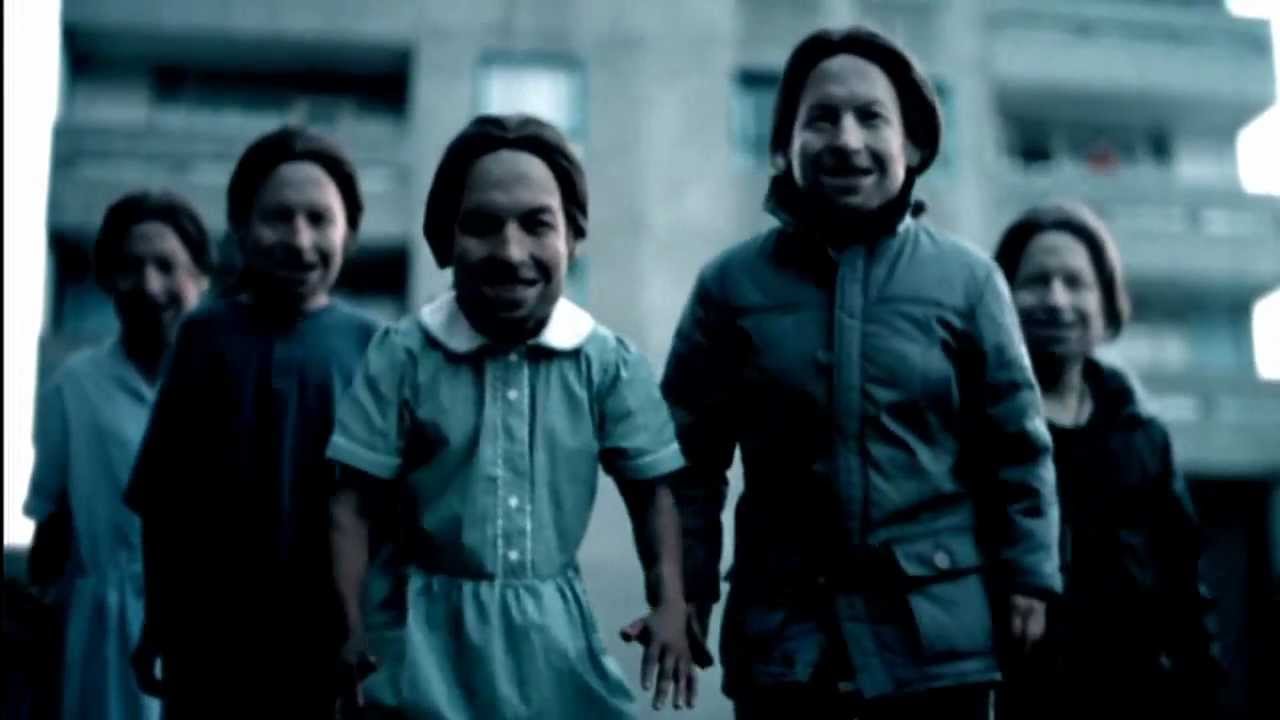
Another video Cunningham has directed is with the artist Apex Twins' song, "Come to daddy". This video consists of children/dwarfs dressed as school kids who are inhuman causing havoc. The star image is unclear due to the many children running around and a grandma. This music video has extremely unconventional ideas due to the inhuman characters which may confuse the mainstream audience.

Another video Cunningham has directed is with the artist Apex Twins' song, "Flex". This video consists of a couple's relationship being portrayed in a physical fight. It also can be seen as the progression of life being shown due to the inhuman imagery and slowly turning human. This would also leave the audience confused due to the weird scenes of physical violence however, also the passion the couple has for each other.


The credits Cunningham received for his music video's were very significant. Bjork's "All is full of love" won multiple awards including an MTV music video award for Breakthrough Video and was nominated for a Grammy for Best Short Form Music. It was also the first ever music video to win a Gold Pencil at the D+D awards. Moreover, his video for Apex Twins' "Windowlicker" was nominated for the Best Video award at the Brit Awards 2000.

Conventions of Cunningham's work are unusual themes which include abnormal and inhuman behaviours. Also, he promotes the idea of disabilities that occur in society and usually includes it in his work. Personally, I believe that the music video's Cunningham has directed are extremely diverse and are risky to use in society today due to the mainstream views on society today.


Gondry:

One music video Gondry directed was "Hardest button to button" by White Strips. This video consists of the band itself performing the song and is purely based on concept. There is an emphasis on star image however, not too heavily focused due to the other focuses on the instruments and repetition of the edits. This may leave audiences feeling confused due to the heavy repetition of movements matching the music.

Another music video Gondry directed was "Mad World" by Gary Jules. This video is purely based on concept due to the heavy performance of dancers and only slight shots of the artist watching the performance himself. It consists of one shot which is a panning shot throughout the whole music video which may confuse the audience as to why there is no complex editing in order to entertain them.


Another music video Gondry directed was "Come into my world" by Kylie Minogue. This video is also purely based on concept due to the constant panning shot of repetitive clones carry out a daily routine. This may leave the audience also feeling confused due to the constant movements being made and may not be able to connect them to the artist's feelings.


Conventions of Gondry's work are repetitive themes throughout the music videos. He enjoys creating patterns and videos that are concept based due to the lack of narrative in each one. This is clear because in each video he does not relate the visuals to the lyrics however, just creates ideas that are random. Personally, I believe that Gondry's work is also extremely diverse however, much more mainstream when comparing it to Cunningham's work, therefore, I would prefer to include Gondry's work in my own music video. This will enable me to attract audience's attention in a less distressing manner.


Advantages of diverse music videos:

  • Entertainment for the audience, to see something different in order to stay engaged.
  • Portraying individual style, which would show the loyal audience's the artist's feelings and how they are able to express it.
  • There is always a niche audience for diverse artist's which means these are made purely to entertain a specific audience and not for mainstream artists.
  • Create's hype, which would ensure the music video becomes popular and is talked about gaining publicity for the audience.
  • Abstract comes to life, suggesting the artist's artistic views and beliefs can be portrayed clearly through their music videos.
  • Mentally challenging, which is done to challenge the audience's views which is a form of educating them.
  • Reinvent star image, this may be done to change an artist's reputation or the gain more publicity for and old artist who needs to be modernised. For example, Madonna used Cunningham to reinvent her star image after a break in her successful career.
  • Memorable, will stay in history forever for people to remember the special views of each individual artists.

Disadvantages of diverse music videos:
  • Could be offensive, suggesting that some scenes in these music videos may cause harm or anxiety for audiences and may make them feel uncomfortable due to the diverse ideas.
  • Theres a much smaller relationship between the artist and audience due to the diverse culture which will only apply to the niche audiences.
  • Exposure to be censored, meaning that the artist has a much higher chance of not being able to promote their video properly due to distressing videos.


I believe that diverse music videos should stay away from mainstream music culture because it can cause music video's to become less popular rather than boosting it's success. This is because, the diverse nature shown in each music video may be extremely distressing for the audience's and may cause controversy in the public eye. It is also extremely risk taking and may harm an artist's career.

Overall, there are many advantages and disadvantages to creating a diverse music video which has helped me to decide on whether I would personally follow this theme in my music video. I have decided that I will not be going to the extremes of Cunningham's videos, however, may take features from Gondry's work as it is more subtle. This will enable me to still create a successful music video and still attract the mainstream and niche audiences.